
Sportsbooks Pay Thousands for your eyeballs
Historically, watching sports games has centered on rooting for a favorite team, enjoying fun competition, or admiring athletic excellence. Lately, however, something more troubling has entered the picture and is reaching our communities and children.
I’m talking about sports betting.
Count the sportsbook ads during the next game you watch. It feels as though you can’t watch a sporting event without being encouraged to place a wager. The Washington Post found that every major sports broadcast it reviewed contained at least one reference to betting, and that during last year’s major sports finals, gambling imagery came up on average once every 11 seconds.
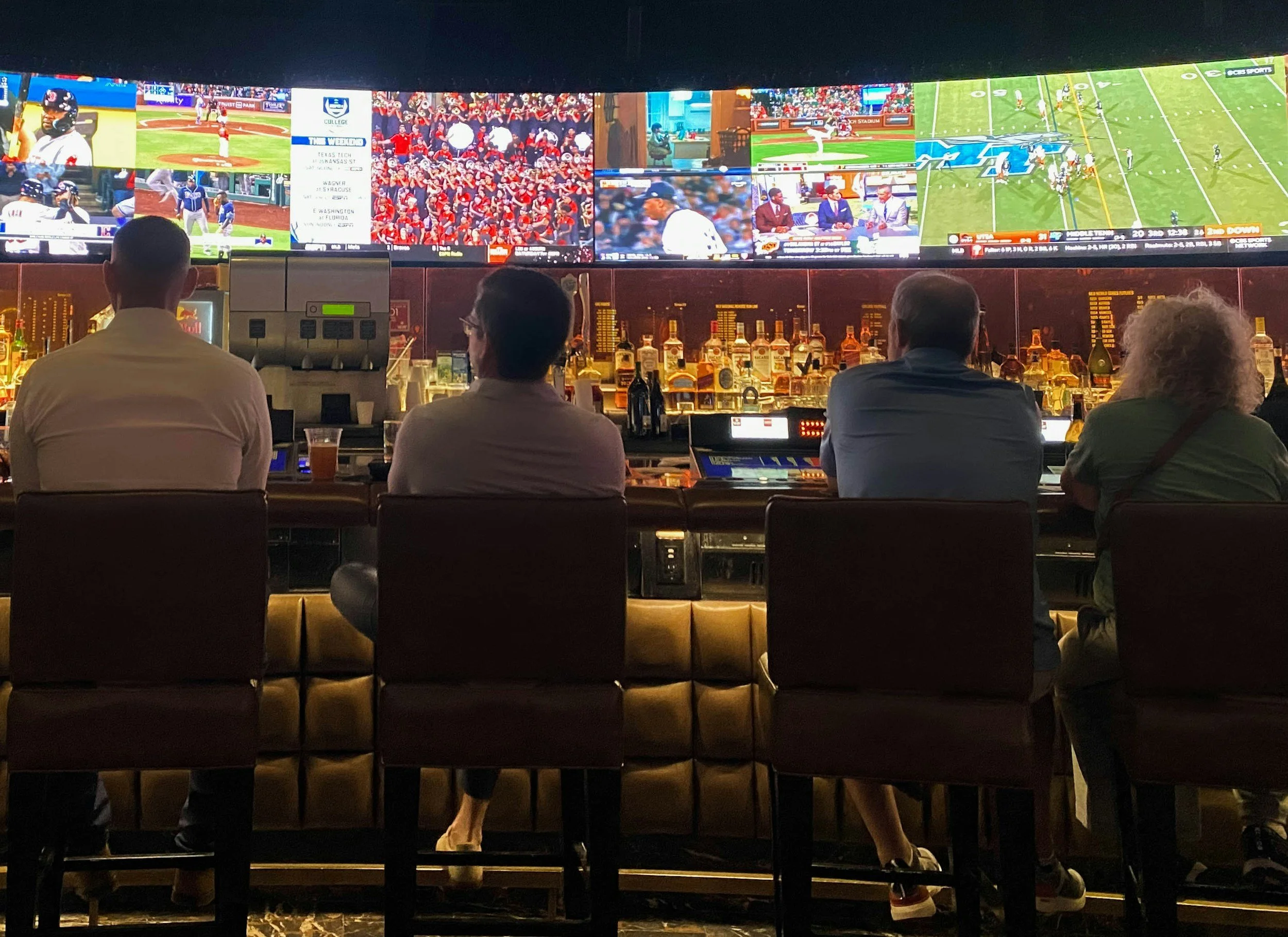
Since the Supreme Court opened the door to legal sports betting in 2018, the industry has exploded. Sportsbooks now take in roughly $166 billion in wagers annually. The number that stands out most to me, however, is this: Sportsbooks spend roughly $500 to $800 to acquire a single new customer through advertising and promotional offers.
Think about what that implies. Somebody has calculated, with remarkable precision, what your attention is worth. A sportsbook only spends that much in advertising because it expects the average customer to lose considerably more over time.
To a large degree, this strategy has worked. Millions of Americans now gamble each year, and most recreational participants lose money.
The question for many people has therefore become: What can we do about this?
One answer lies in the nature of the sports advertising and marketing strategies themselves. Each company is desperately fighting for a share of customers it may only get one chance to acquire. Similar to the way airlines offer miles bonuses, or credit cards offer welcome bonuses, these sportsbooks will typically offer high-value new-user promotions and incentives to capture their first-time audience.
While these new-user promotions are designed to hook long-term customers, they also create a unique opportunity. By strategically using these promotions without falling for the “trap” of long-term gambling, consumers can earn a profit via the very system designed to acquire and retain customers. I started HedgeQuarters Consulting along with my cofounder Jordan Feigenblum, to show that there is one way to turn the tables on the sportsbooks: Try to keep the promotional money the sportsbooks are spending on you.
These new-user promotions have real value. It’s the terms that make them dangerous. Once you understand the terms, you can satisfy them without taking on risk in any meaningful sense.
The strategy is called matched betting, and the concept is straightforward. Suppose a sportsbook offers a $1,000 deposit match. A customer deposits $1,000 and receives another $1,000 in promotional credit. Rather than placing the full $2,000 on one outcome, the customer places a wager on one side of a game—say the Yankees—and then places an offsetting wager on the opposite outcome—say the Mets—at a second sportsbook.
One bet wins, the other loses, and the two bets largely offset each other. What remains is the value of the promotional credit, which can then be withdrawn back to the customer. Because these promotions are generally available only once per customer, the opportunity itself is also largely a one-time event.

Run correctly across a series of sportsbooks and offers, the strategy converts marketing dollars into cash. Clients who begin with access to multiple available sportsbook promotions have often generated several thousand dollars in gross value, though results vary based on location, available offers, capital and individual circumstances.
What HedgeQuarters does is instruction, not execution, and this is a distinction I cannot emphasize enough. Our firm never accepts client funds, places wagers or logs into client accounts. Sessions are conducted by phone, Zoom or screen-share, with consultants walking clients through which promotions to target, how to deposit, how to place matched bets, and how the numbers work at each step. We have become the industry accepted experts of matched-betting guidance and help.
Everything happens through the client’s own account, using the client’s funds and actions. We are simply providing instruction and guidance throughout the process.
HedgeQuarters also guarantees client capital in writing. Because the strategy hedges both sides of each wager, the primary risk is human error rather than the outcome of a game. HedgeQuarters backs that exposure with its own funds and has never had to reimburse a client. Our fee is a percentage of profits and is collected only after the client has successfully withdrawn funds.
There are some limitations, however. The process requires time. Most clients need about four weeks of brief sessions to work through a full slate of offers. It also has a ceiling. New-user promotions can only be claimed once, making this a one-time opportunity rather than a recurring income stream, though some users may later qualify for additional offers.
Ultimately, none of this changes the larger reality. Sportsbooks are spending enormous sums of money to acquire customers, and that money will be distributed one way or another. The danger remains that most people who claim these offers eventually become regular customers, which is exactly what the sportsbooks are counting on.
One of the few ways to benefit from the system without becoming part of it is to take advantage of the promotional offers, complete the process once, and walk away.
Most people never think twice about where those promotional dollars go. Others choose to understand how the system works and keep some of that money for themselves. So far, we at HedgeQuarters have helped over 4,000 people do exactly that. I encourage Link readers who would like to better understand these promotions to reach out and learn more.
The next time you’re watching a game and seeing countless betting ads, remember what each one represents: a company that has already calculated exactly what your attention is worth. The only question left is whether that money ends up in your pocket or theirs.