
Expected Value and Odds Shopping
What is Expected Value?
Expected value is a way to calculate the long-run average outcome of any random process — essentially, what you'd expect to happen on average if you repeated something many times.
The formula is simple: multiply each possible outcome by its probability, then sum everything up.
EV = Σ (outcome × probability)
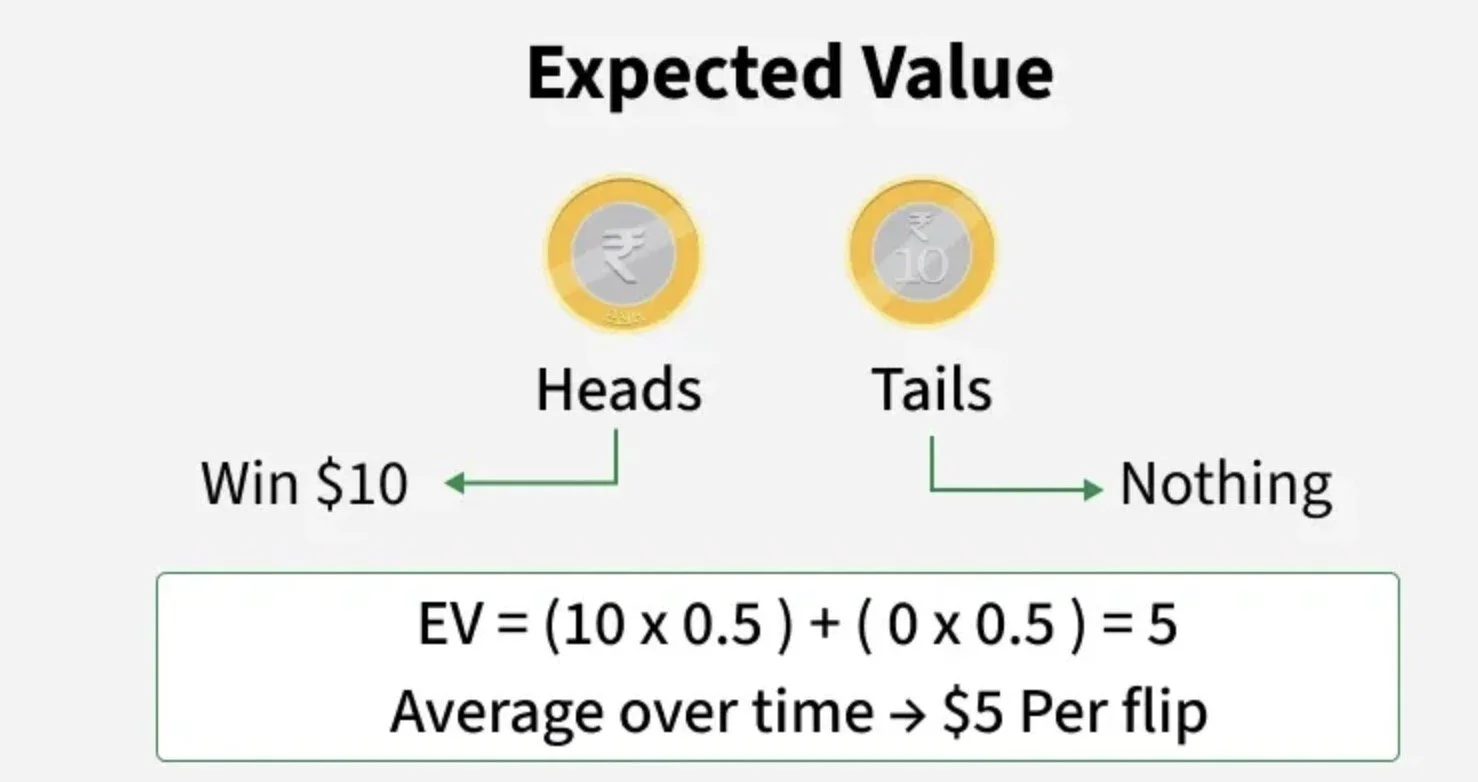
For example, a coin flip where heads wins you $2 and tails loses you $1:
Heads (50%) → +$2
Tails (50%) → −$1
EV = (0.5 × $2) + (0.5 × −$1) = +$0.50
On average, you gain 50 cents per flip. Play it 100 times and you'd expect to be up ~$50.
A few key ideas to keep in mind:
EV doesn't predict any single outcome — it's about the long-run average.
Positive EV means the bet favors you; negative EV means it favors the house.
Most casino games have negative EV — that's how casinos stay in business.
EV is used everywhere: insurance pricing, investing, medical decisions, even sports betting.
Odds Shopping
Every sportsbook sets their own lines. They all build in a margin (the "vig" or "juice"), but they don't always agree on probabilities. When books disagree, you can find the best number — and that difference compounds directly into your EV.
How American odds work
American odds center around $100:
Positive odds (+150): bet $100 to win $150 (plus your stake back)
Negative odds (−150): bet $150 to win $100
To convert to implied probability:
Negative: |odds| / (|odds| + 100) → −150 becomes 150/250 = 60%
Positive: 100 / (odds + 100) → +150 becomes 100/250 = 40%
The vig explained
A fair two-sided market would sum to exactly 100%. Books always push it above — typically 104–110%. That excess is the vig, and it represents your expected loss per dollar wagered on a random bet.
Why line shopping changes your EV
Say you want to bet on Team A. The "true" probability (what the market actually believes) might be 55%. But:
Book A offers −115 → implied prob 53.5% → you're overpaying
Book B offers −108 → implied prob 51.9% → much closer to fair
For every $100 you wager you make an additional $6 by choosing Book B rather than Book A. This can add up to a significant amount of money over time.